
You know the routine. You’ve got a gym membership, a solid playlist, and a rotation of workouts saved on your phone. Three weeks of random circuits later, the only thing that has changed is your saved posts. That is not an effort problem, it is a plan problem. You were never short of effort. You were short of something repeatable.
That’s where a smart weight training program for women comes in. It is not about smashing yourself every session or chasing a different workout every week. It is about following a simple, written plan and making small, controlled increases over time.
This guide will give you a concrete weekly template for two to four sessions. We will show you how to stop stalling and start progressing. You will learn the four progression levers to nudge, how to map out your week, and how to tell the difference between a bad day and a real plateau. Let’s build a plan that actually works.
Why Random Circuits and a New Workout Every Week Stall
A new YouTube workout, class or Instagram circuit every week feels productive. You finish sweaty and sore. But nothing repeats long enough to measure, so you can’t tell if you’re getting stronger. NHS advises strengthening all major muscle groups on at least 2 days a week. That’s the floor, not the ceiling, and the simplest baseline for a weight training programme for women. Progress needs a repeated lift, a tracked load and a small nudge. Without last week’s numbers, there’s nothing to beat, so it stays a workout rather than training. Circuits aren’t the problem: NHS lists circuit training as vigorous. Randomness and no progression are. Sweat isn’t the metric; a slightly heavier set or one extra clean rep is. By the end you’ll have a repeatable template, sets, reps, rest, four progression levers and a way to spot a bad day versus a plateau. Staying consistent when life is busy matters, and here’s how a coach structures it.
The Four Progression Levers You Will Actually Use
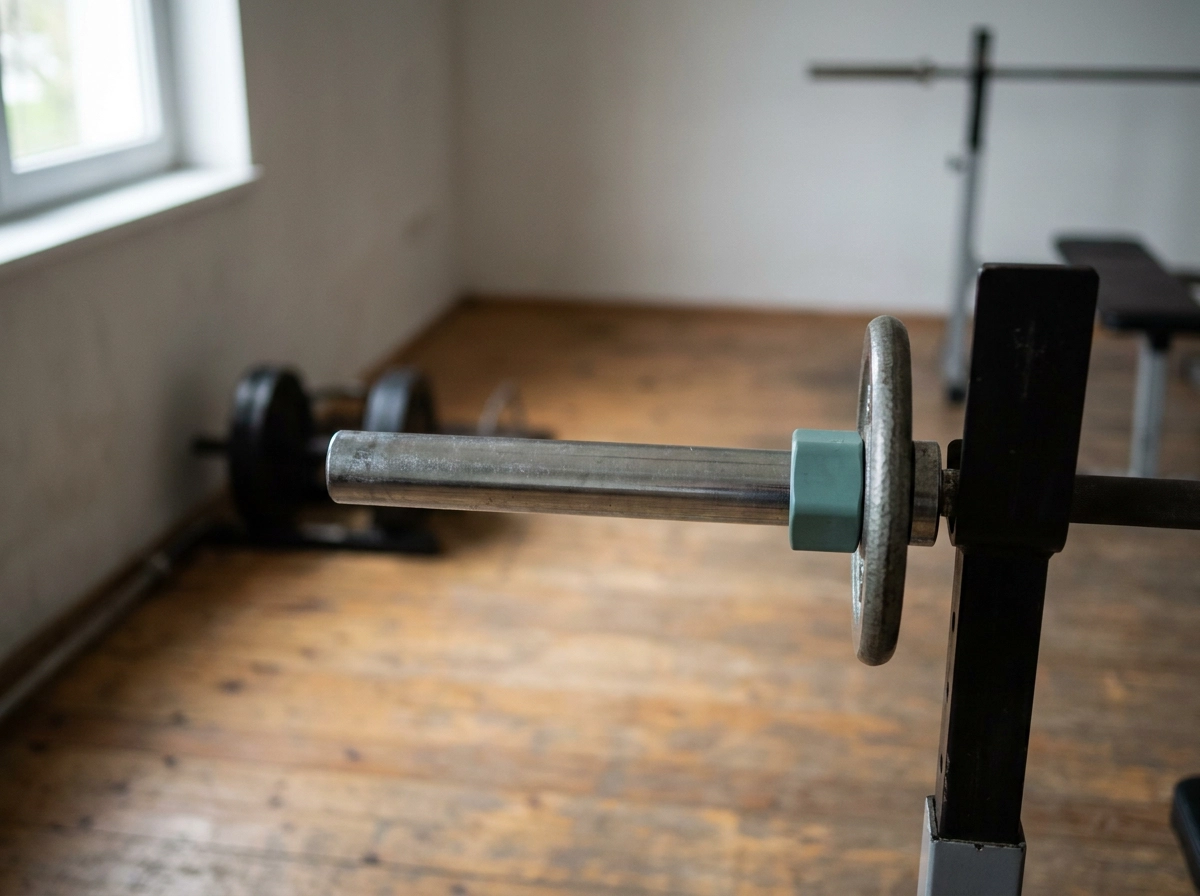
Progression is simpler than the fitness industry makes it. Four levers do the heavy lifting; use only one per week, per lift.
Load: weight on bar, dumbbell or stack pin. Smallest useful jump is usually next available weight, so tiny increments matter for beginners and upper body work.
Reps: add one or two clean reps same load. Often easiest when next dumbbell is a big jump; counts as progress as much as a heavier set.
Sets: a round raises total work but costs time and adds fatigue. Nudge later, once comfortably owning current volume a fortnight. More sets isn’t automatically better.
Tempo: slower lowering or bottom pause. A 3-second lowering makes same load considerably harder: brilliant for home training, bodyweight work or busy gyms with rack taken.
Caveat: trainer practice, not published formula. Sources like ACSM’s progression models give general principles, not personal rules. Change one lever at a time, per lift, per week, or you cannot know which worked.
Sets, Reps and Rest in Plain English
Levers understood. Now the numbers.
As for effort: if you could chat through the set, it was not hard enough.
Coaching starting point: big compound lifts at 2 to 4 sets of 6 to 12 reps; accessories at 2 to 3 sets of 10 to 15. Beginners, start at the bottom. (these are coaching starting points, not published prescriptions).
Rest 60 to 90 seconds for smaller or single joint work, 2 to 3 minutes for squats, deadlifts and presses. Need longer for good form? Take it. Rest is part of the programme, not a fitness failure. (coaching convention; take what you need).
The 2026 ACSM resistance training update is a landmark position stand, with an overview of reviews published in March 2026. Use it as context, not invented exact numbers.
Consistency, even twice a week, is what makes a weight training programme work.
What to Sort Before Session One
Before a barbell, sort five things. Protect two or more sessions, even 30 to 40 minutes is enough to get started. A two-session strength plan for women is proper, not a compromise, and likelier to survive a busy week than a five day fantasy. Kit: squat rack or leg press, bench, dumbbells and cable or machine option covers everything. Machines and free weights count; machines are respectable for building confidence before racks. Check medical sign off. NHS advises a GP first if returning after a long break or with an existing condition. Worth the call for peace of mind. If postnatal, same guidance says new mothers should include strength training, with more intense activity possible after 6 to 8 week check if able. Build back gradually; let your body set pace. Over 40? Strength training still works beautifully. Decide your minimum viable session now: 20 minutes, two lifts, three sets each, for collapsed days. That back pocket version stops one chaotic week becoming two months off.
Step 1: Pick Two or Three Compound Lifts Per Session
With your slots diarised, here’s what goes in them. Forget long lists of muscles; the body moves in four patterns:
- Knee bend: squat, leg press, split squat
- Hip hinge: Romanian deadlift, hip thrust, deadlift
- Push: press up, chest press, overhead press
- Pull: seated row, lat pulldown, assisted pull up
Two big compounds plus one or two accessories per session covers every major muscle group across a week without turning your evening into a part time job. Pick lifts that repeat well: split squat, Romanian deadlift, hip thrust, chest press, seated row, shoulder press. They also load in small jumps, which matters when you’re nudging weight up.
Compounds first is also the order ACSM progression guidance recommends. And repeating the same five to eight lifts for several weeks isn’t boring; it’s the mechanism. Variety is what you reach for once you’ve milked a lift for all it’s worth.
Toning? Toning is muscle with a marketing department. It is what muscle looks like once it gets enough stimulus, food, sleep and recovery. That’s why tracking load beats chasing novelty.
Keep the whole thing to one page.
Step 2: Map Out Your Week, Two to Four Sessions
When it comes to the calendar, most plans fall apart.
Two sessions (Monday and Thursday): both full body, each with two lower and two upper body compounds. Ideal for unpredictable weeks, and it meets the twice-weekly minimum.
Three (Monday, Wednesday, Friday): full body each time, or lower, upper, full. Three full-body sessions give a beginner the most efficient practice at the big lifts.
Four (Monday, Tuesday, Thursday, Saturday): upper and lower twice each, or push, pull, legs plus a full body. Four is the ceiling for busy weeks, not a target.
Leaving a day between sessions targeting the same muscle group is common coaching practice, but don’t lose sleep over a perfect split. The same sessions reappearing weekly matters more than which days you pick.
One clarification: the NHS advice to spread activity over 4 to 5 days covers overall movement, not four strength sessions. Walks and the school run count. If consistency is your sticking point, these tips to keep coming to the gym help.
Push, Pull, Legs: How to Sequence Without Overthinking
Push covers chest, shoulders and triceps. Pull covers back and biceps. Legs covers quads, hamstrings, glutes and calves. Core can be bolted onto any.
Three days: leg, push, pull, with a walk or rest day between. It sounds like a bodybuilder split, but it is just a tidy way to forget nothing.
For two days, use the full-body approach from Step 2, alternating which compound you lead with. For four days, upper/lower twice or push/pull/legs plus full body works cleanly.
No official guidance sets out push, pull, legs, so treat this as a practical template and coaching practice, not a guideline.
Step 3: Log It So Next Week Is Not a Guess
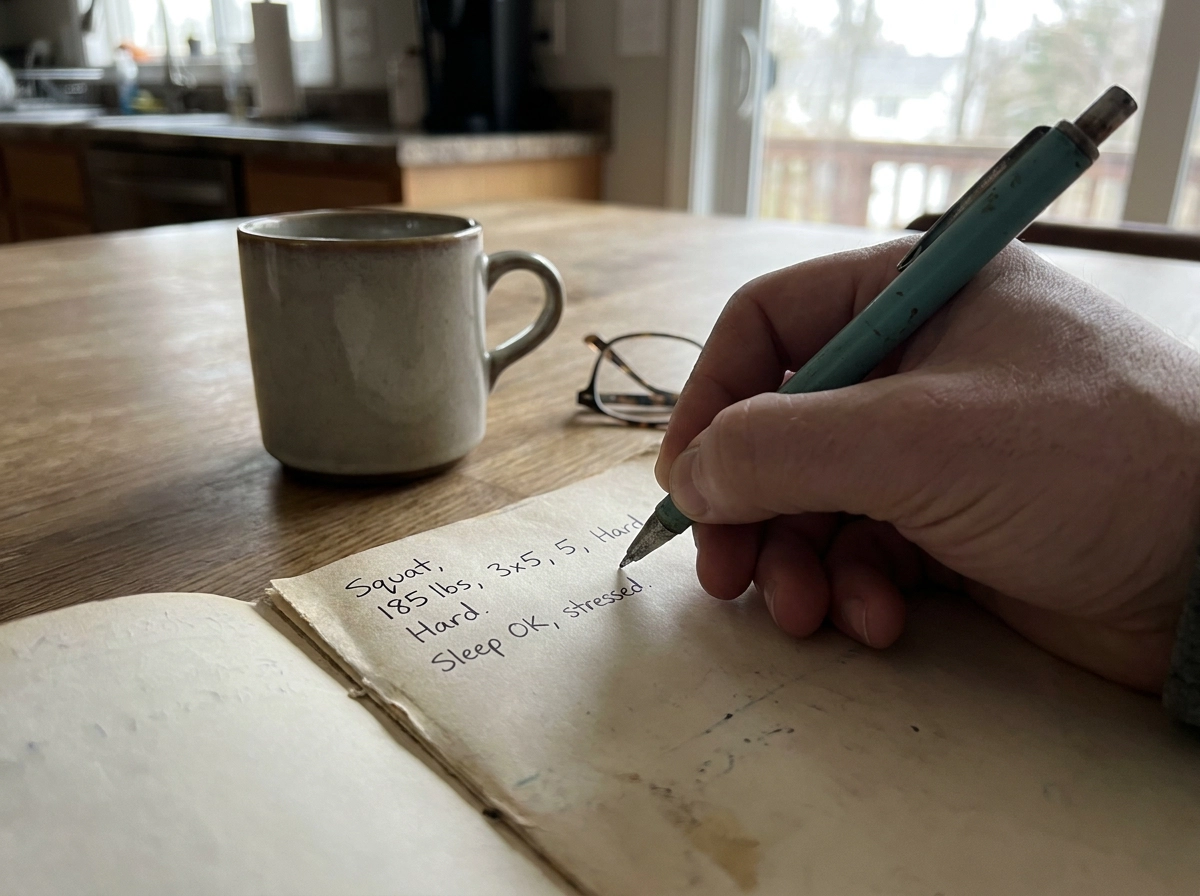
Once the split is sorted, write it down. For each lift record five things only: exercise, load, sets, reps achieved, and one honest word for how the last set felt. Add a quick note on sleep, food or stress if the week went sideways. Phone notes, a supermarket notebook or a sheet on the fridge all work. No beginner needs a spreadsheet they never open. Log truthfully by stopping with one or two good reps left, because a number you cannot repeat next week is fiction with extra DOMS. This is the hinge: without a log you cannot tell progress from a good day, and you will drift back to whatever looks fun. The log makes a weight training program for women progressive. Thirty seconds after each set, before you refill your bottle, beats any new exercise this month. It also helps you sidestep the 10 mistakes women make in the gym that keep people guessing.
Step 4: The Weekly Progression Decision
Your log is now the boss. Here is how you use it each week, one decision per lift.
Double progression is your default. Hit the top of your rep range on every set with good form? Add the smallest available weight next time and drop back to the bottom of the range. Then climb again. (Double progression and the rules below are Marlies’s coaching method, not a published formula.)
Didn’t hit the top? Repeat the same load. Doing nothing differently for a week is a deliberate training decision, not a wasted week.
Adding sets comes later. Only when you have comfortably owned your current volume for two weeks and your diary genuinely has room. Otherwise you buy one good session and two poor ones.
When the weight jump is too big, use tempo: same load, three second lowering or a two second pause. Run it two to three weeks (coaching practice), then convert that control into a load increase.
Change one lever at a time, per lift, per week. Give it a fortnight before you judge it. This is coaching practice, not a published rule, and it is the difference between progressing and wobbling.
Next: telling a bad day apart from a real plateau.
Bad Day or Actual Plateau? How to Tell the Difference
A bad day is one session where the same load feels heavy, you drop a rep or two, your sleep was rubbish, food was thin, work was awful, or your period is due. That is a data point, not a personality flaw: repeat next week. If one rough session makes you want to give up, that’s the what-the-hell effect, not a plateau.
A plateau, by Marlies’s coaching criteria, means missing the same rep target on the same load for three consecutive sessions across two or more weeks, on more than one lift. Patterns are data.
Check the boring variables first: adequate sleep and protein, and gradual increases rather than leaping two plates because you felt strong once. Perceived effort fluctuates across your cycle and perimenopause, so track a month before deciding.
If it’s real, act small: take a small step back on load, swap a lift for a variation of the same movement, or take a lighter week. Change one thing, log it. These are coaching criteria, not published rules.
When to Ease Off and When to Get a Second Pair of Eyes
A real plateau? Recovery is the next lever. Take a lighter week periodically (coaching practice), or if two sessions running feel like a slog. Cut sets, keep the same lifts, protect technique.
Soreness settling within a couple of days is normal. Joint pain that lingers, changes movement or wakes you at night needs attention, not another session.
No measurable progress over several weeks, or a new plan every fortnight (practitioner heuristics, not published thresholds), or a week that only works if nothing else goes wrong are programming problems, not character flaws.
Coaching earns its keep by watching technique, deciding load and building around your diary. Marlies Fitness offers personal training for beginners and returners, with programmes built around work and family life. If guessing keeps tripping you up, see what your first six weeks of PT looks like.
Your Next Seven Days
Your next seven days can be refreshingly boring. No new programme, no heroic double sessions, nothing to shake. Pick two days you can genuinely protect this week, choose two compound lifts and one accessory for each session, and write them on one page. Log the load, sets and reps for every set, even badly, because a scrappy honest log beats a perfect one you never open.
Repeat those same sessions for several weeks before you change anything. That is how strength training for women stops being guesswork and starts becoming progress. Use the NHS baseline as your sanity check: strength work twice a week, all major muscle groups, hard enough that you need a short rest before the next set, with movement spread across the week.
Apply the double progression method from Step 4 to keep moving forward. Planning beyond that? Strength Training For Women Over 40 is a good next read. Stop chasing a new workout and chase a slightly heavier one.
Conclusion
Strength training for women does not need to be complicated, just consistent. The four levers of progression, compound lifts, and honest logging will take you further than any random circuit ever could. The framework is simple: consistent sessions, the same programme repeated, and one small nudge each week.
Your only job this week? Pick two days, write them down, and chase a slightly heavier lift. Boring consistency beats brilliant chaos every time.