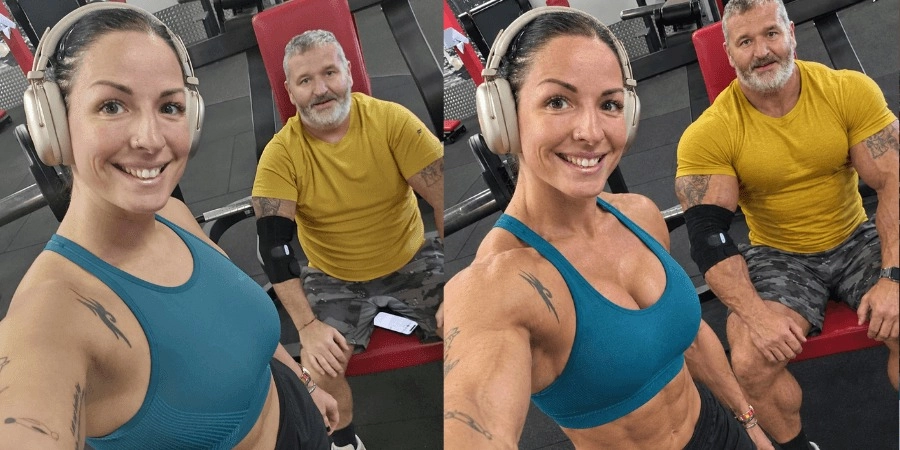
She is not right. She is good at filming. Those are different skills.
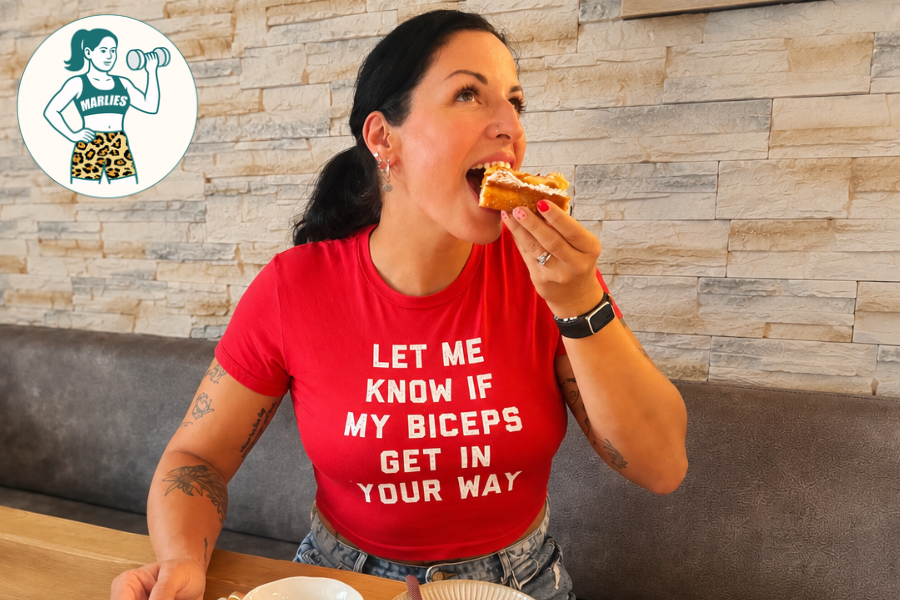
I posted the AI pic above this week as a joke. I’m naturally hilarious as all my clients know 😊 But the fact is, it’s just that easy to appear to be someone and something you are not online.
And yes, this pic is now my husbands profile pic…
So, let’s “bust” some myths shall we?
Why you shouldn’t believe everything you see on Social Media
Myth 1: Those gym bodies are real
Scroll for ten minutes and you’ll see more six-packs than a supermarket fridge. Perfectly lit, perfectly symmetrical, suspiciously free of pores. A growing share of them were never photographed at all. They were generated. Type a few words into an image tool and out comes a woman with abs, a ponytail and a ring-light glow – no gym membership required.
It’s the perfect fitness myth, because you cannot out-train something that doesn’t exist. There is no programme, no meal plan and no amount of willpower that will make you look like a picture that only ever lived on somebody’s laptop. You’re not failing. You’re comparing yourself to a prompt.
The older version of the same trick, minus the software, is the classic day 1 versus day 30 post. Day 1 in grey light after a big meal, day 30 first thing in the morning, dehydrated, somewhere with better lighting and a tan. Nothing was built. Something was staged.
Here is the boring truth. Four weeks is enough time to feel better, sleep better and get noticeably stronger. It is not enough time to grow the glutes of your dreams, and anyone promising otherwise is selling you something with a discount code.
Myth 2: Lifting weights will make you bulky
This one refuses to die. It’s been in circulation longer than most of my gym kit.
Building serious muscle takes years of hard training, a lot of food and, for most women, a fair amount of deliberate effort. Picking up a dumbbell twice a week will not turn you into a bodybuilder by Easter. What it will do is help you climb stairs without sounding like a kettle, and it’s one of the best things you can do for how you feel in your clothes. I’ve written before about why building muscle mass is essential for women’s health — and about the flip side, that strong beats skinny every single time.
Myth 3: Sugar is the devil, carbs are the devil, everything is the devil
Social media runs on food fear. Sugar is “toxic”. Carbs are “inflammatory”. Fruit is somehow a problem now.
Meanwhile, the actual research is a lot less dramatic, and if you want the long version I’ve already written it up in is sugar really the problem. Spoiler: the problem is usually total calories, protein and consistency — not the banana you put on your porridge.
Myth 4: “You just need to burn more than you eat”
Technically true. Practically useless. It’s the fitness equivalent of “just be richer” as financial advice.
It also skips the bit nobody films: the start-stop cycle. Motivation one week, total apathy the next, guilt, repeat. That’s not a maths problem — it’s a habit problem, and why diets fail is worth a read if that sounds familiar.
Myth 5: The supplement that changes everything
A scoop, a patch, a tea that makes you “detox”. You don’t need to detox anything. Your liver has been doing that job, unpaid, without a following. If you want supplements to take seriously, creatine is the one worth knowing about, and even that is a small edge rather than a personality.
Why the rubbish wins
Because the algorithm rewards confidence, not accuracy. A calm woman saying “eat some protein, lift something heavy, come back next week” doesn’t get shares. A stranger shouting “DO THIS AND WATCH YOUR STOMACH FLATTEN” does.
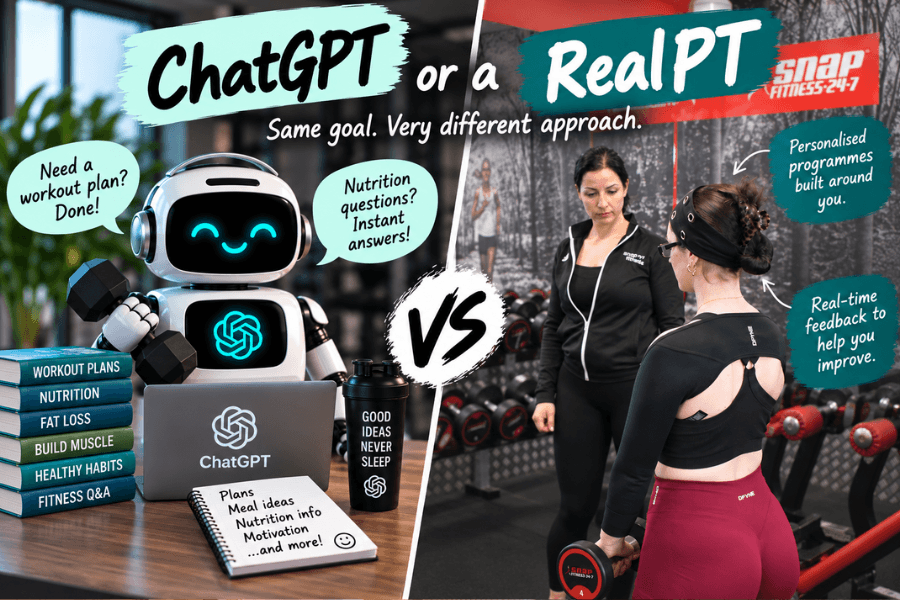
Compare that to asking a chatbot for a plan. It will answer instantly, in perfect paragraphs, with total confidence, and it has never once seen you squat. I’ve written a whole post on ChatGPT versus a personal trainer — short version: one of them notices your right knee.
The 20-second nonsense detector
Before you take advice from anyone on the internet (me included), run this:
- Are they selling something? Nothing wrong with that, as long as they say so.
- Is there a timeframe or a promise? “In 14 days” is a red flag. So is “guaranteed”.
- Does it claim one food, one exercise or one supplement fixes everything?
- Could this advice be given to a 24-year-old and a 54-year-old without changing a word? If yes, it’s not coaching, it’s a slogan.
- Does it make you feel rubbish about yourself? Close the app.
That last one matters more than people admit. Gym anxiety is real, and a feed full of perfect bodies telling you you’re behind schedule makes it worse — not better.
What actually works (sorry, it’s boring)
- Lifting something heavy two to three times a week, gradually getting harder.
- Eating enough protein. Most women I meet are nowhere near it, hence this post on how much you actually need.
- Doing some of both cardio and weights, rather than treating them like rival factions. I’ve compared the two properly in cardio versus weights for women’s fat loss.
- Showing up on the days you can’t be bothered, which is a different skill from motivation and one you can practise.
- Learning the basics properly, so you’re not the person doing three common mistakes I see every week — conveniently gathered in 10 mistakes women make in the gym.
The NHS physical activity guidelines for adults are a decent, unglamorous benchmark for the cardio side of that, and the World Health Organization has written about how quickly health misinformation spreads if you want to feel bleak about the internet for ten minutes.
Where I come in
If you’re new to the gym, or back after a break, or genuinely can’t tell whether the woman on your screen is a coach or a saleswoman, that’s what I’m for. I coach women in Exeter, one to one, at whatever pace doesn’t scare you off — have a look at what the sessions involve, or start with how to build gym confidence as a beginner.
No crash diets. No detoxes. No 30-day promises. Just a plan that fits your week, and someone checking your form while you do it. You can keep the ring light.