Fat Loss vs Weight Loss: Why the Scales Are Lying to You.
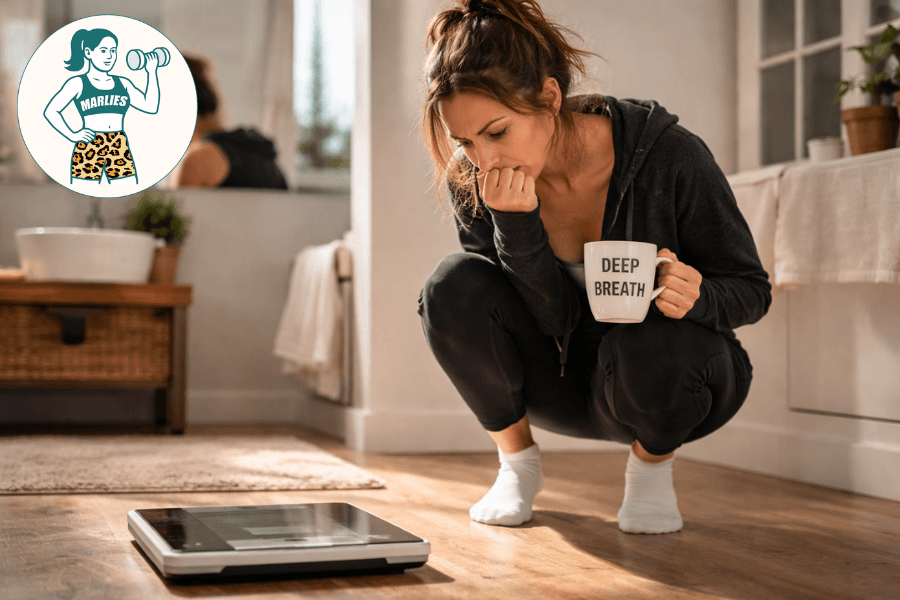
You trained. You ate better. You resisted the “just one biscuit” lie (which is always a trap). And yet the scales either didn’t move… or somehow went up.
Here’s the truth: the scales measure weight, not fat loss.
And weight is influenced by a bunch of things that have nothing to do with whether you’re actually getting leaner.
So let’s clear this up properly: what fat loss is, what weight loss is, why the scales mess with your head, and what you should track instead if you want real results.
Fat loss vs weight loss: what’s the difference?
Weight loss = total body weight going down
That includes:
- body fat
- muscle
- water
- glycogen (stored carbs in your muscles)
- food sitting in your digestive system (yes, really)
You can lose “weight” while losing mostly water and muscle — which looks worse, feels worse, and usually rebounds fast.
Fat loss = body fat going down
This is what most people actually want:
- a leaner look
- better shape
- clothes fitting better
- healthier body composition
- more energy and confidence
You can lose fat while your scale weight stays the same (or even goes up a little) if you’re building muscle or holding water.
That’s why fat loss progress often looks “slow” on the scale but obvious in photos and measurements.
Why the scales are lying to you (daily weight is noisy)
Your scale weight can jump around 1–6+ lbs (0.5–3kg) in a week for totally normal reasons.
1. Water retention
Saltier meal? More water held.
Stress? More water held.
Poor sleep? More water held.
Hard training session? Inflammation = more water held.
Your body is not a simple math problem. It’s a walking chemistry set.
2. Carbs and glycogen
When you eat more carbs, your body stores more glycogen in muscles, and glycogen stores water with it.
So you can “gain weight” overnight while actually improving performance and building muscle.
3. Hormones (especially for women)
Menstrual cycle fluctuations can seriously affect water retention and scale weight. It’s not fat gain — it’s biology doing biology things.
4. Food volume and digestion
If you’ve eaten more food (even healthy food), you might literally just have more in your system. That’s not fat.
5. Muscle gain (and training adaptation)
If you start lifting weights, it’s common to gain a bit of scale weight while losing fat — especially early on.
That’s not failure. That’s the best-case scenario.
The classic trap: “I’m not losing weight so it’s not working”
This is how people quit right before it was about to click.
If you’re training consistently and eating in a calorie deficit, fat loss is happening – but the scale might not show it clearly day to day.
You need better tracking. Not more punishment.
What to track instead (this is where progress gets real)
1. Weekly average scale weight (not daily)
If you weigh daily, don’t obsess over the number. Take a weekly average and compare weekly averages over time.
2. Waist measurement
If your waist is going down, you’re very likely losing fat — even if the scale is being dramatic.
Track once per week:
- waist at belly button
- (optional) waist at narrowest point
Same time, same conditions.
3. Progress photos (every 2–4 weeks)
Same lighting, same pose, same distance.
Photos show changes the scale can’t.
4. Clothes fit
One of the most underrated fat loss metrics: Are your jeans less angry at you? That’s progress.
5. Strength and performance
If your lifts are improving while your waist is shrinking — you’re winning.
“But I just want the scale to go down…”
Totally fair. The scale isn’t useless – it’s just misunderstood.
The scale is useful when:
- you compare weekly averages
- you look at trends over 4–6 weeks
- you combine it with measurements + photos
The scale is not useful when:
- you weigh once, randomly, after a salty takeaway
- you use it as a daily mood detector
- you treat a single weigh-in like it’s a court verdict
What fat loss progress actually looks like (realistic timeline)
- Weeks 1–2: scale might drop quickly (water/glycogen changes)
- Weeks 3–6: steadier fat loss; scale may fluctuate
- Weeks 6–12: visible changes in photos/measurements if consistent
Fast drops are usually water. Real fat loss is a trend, not a straight line.
The bottom line: don’t let a number bully you
If you’re:
- training regularly
- eating mostly well
- hitting protein
- moving more
- sleeping decently
…and your waist, photos, strength, and weekly trends are improving – you are making progress, even if the scale is being a liar with confidence.
FAQ: Fat loss, weigh-ins, and scale fluctuations (Exeter Female Personal Trainer Answers)
How often should I weigh myself?
If you’re someone who spirals from one weigh-in, weigh once per week under consistent conditions.
If you can stay calm with data, weigh daily and use a weekly average. The average matters, not the random Tuesday number.
Why did my weight go up after starting the gym?
Totally normal. When you start resistance training, your muscles can hold more water as they recover (inflammation + glycogen storage). That can mask fat loss on the scale for a few weeks.
Why does my weight jump up after a “good” day of eating?
Usually water and food volume:
- higher carbs = more glycogen + water
- higher salt = more water retention
- later meals = more food still in digestion
It’s not overnight fat gain. Fat gain takes a sustained surplus over time.
Can I lose fat without losing weight?
Yes – and it happens all the time, especially if you’re lifting weights, eating enough protein, and improving body composition. You can look leaner, feel better, and drop inches while the scale barely moves.
What’s the best measurement to track fat loss?
For most people: waist measurement + progress photos + weekly scale trend. If all three are moving in the right direction over 4–6 weeks, you’re on track.
I’m in Exeter – can a personal trainer help me stop obsessing over the scales? (shameless plug incoming!)
Absolutely. A good female personal trainer in Exeter will give you a plan and a tracking system so you know what progress looks like without the daily emotional rollercoaster.
If you’re looking for an Exeter female PT (especially if you want a supportive, non-intimidating approach, like mine!), structured coaching can be a game-changer for confidence, consistency, and results. #callme
Is fat loss harder for women?
It can feel harder because of hormonal fluctuations, water retention, and the way stress and sleep impact appetite and recovery. But women can lose fat extremely effectively with the right plan—especially strength training + protein + realistic calorie control.
Let’s Talk
Want a clear, structured plan that avoids all these mistakes? My coaching programmes give you personalised training, nutrition advice, and support so you can finally see results. Book a free consultation today. Or follow me on Instagram for more hints and tips! @MarliesPT